
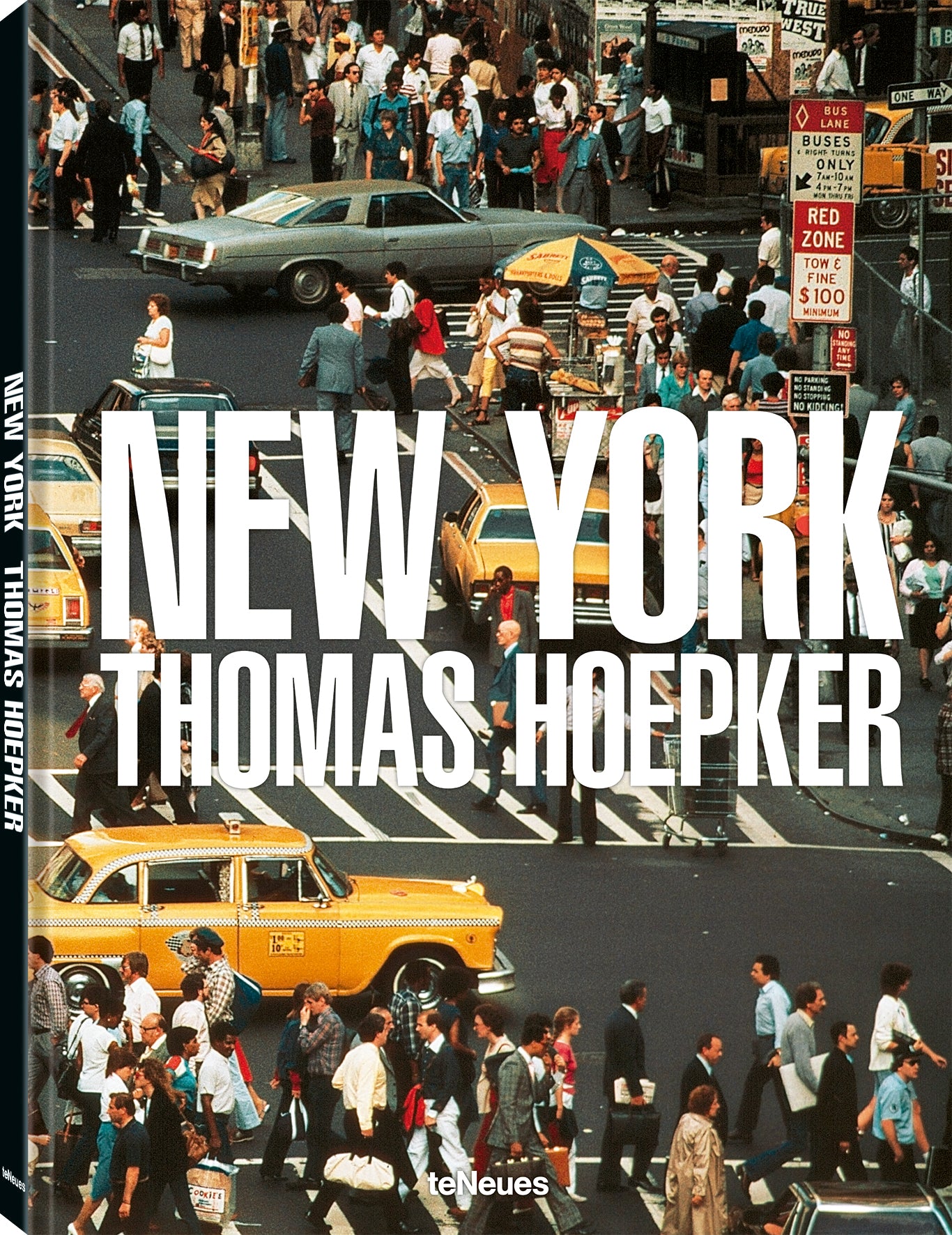
New York Thomas Hoepker
by BSS Technical on Feb 23, 2024German-born Thomas Hoepker (1936) has been devoted to New York since the late 1960s. For over fifty years, he intermittently moved between Germany and The Big Apple as a correspondent and Art Director for Stern, as Executive Editor of the American edition of Geo, and as a Magnum photographer, serving as its president for several years. Hoepker specialized in reportage and stylish color photography, but like Elliott Erwitt, Hoepker prefers to be amidst the hectic street life. He enjoys focusing on crowds and anonymous individuals, each carrying their 'secrets' or telling their own stories.
More than ten years after the first edition of Hoepker’s New York by teNeues Verlag, there is now a second edition that has been supplemented with ….. pages of previously unpublished material between 2013 and 2019 ????<IS THIS CORRECT>>??
Hoepker portrays people and their way of life in all its facets in an unfiltered and direct manner. The revised edition not only showcases the metropolis and its inhabitants but also outlines the artistic development of the creator himself.
The photos are taken from the photographer's extensive New York archive and excel in stylistic diversity. Black and white formats are interspersed with color and impressive architectural photographs, as well as lively street snapshots.
As poet and Pulitzer Prize winner Charles Simic aptly describes in the book's foreword: "In his fascination with the city, Hoepker encounters beauty where no one expects to find it. Like his photo of a bright red armchair opposite three abandoned and stripped brick buildings where someone once sat (p.58-59), or that terrifying and very famous photo where five people are calmly sunbathing and chatting on the banks of the East River while behind them black smoke rises to a clear September sky at the spot where the Twin Towers in Manhattan collapsed earlier that day (p.90-91). (…..) Time and again, Hoepker captures in his photos what even the most sensitive and alert observer has overlooked. That is where the pleasure and the shock of looking at the images in this book come from."
